Agir ensemble pour construire des territoires solidaires et durables
Notre ONG contribue à mobiliser et relier les acteurs et actrices de la société civile et des pouvoirs publics au sein des territoires en incluant les personnes les plus défavorisées, tant au Nord qu’au Sud, en vue de favoriser leurs projets de développement durable. Partant du constat que les échanges partenariaux dans le secteur de la solidarité internationale sont souvent déséquilibrés, nous avons également pour ambition de créer un espace de réflexion, d’échanges et d’actions afin de tendre vers des relations partenariales plus équilibrées.
Agissons ensemble dès aujourd’hui pour co-construire les territoires de demain !
Actualités

Echos Communication recrute un·e responsable de son programme Belgique
Le/la responsable pays sera responsable de l’exécution et du développement du programme d’Echos Communication en Belgique (DGD et autres projets), que ce soit au niveau des activités menées en propre ou avec ses partenaires. Elle/il sera éventuellement responsable d’une petite équipe de collaborateurs·trices, salarié·es, consultant·es ou stagiaires.
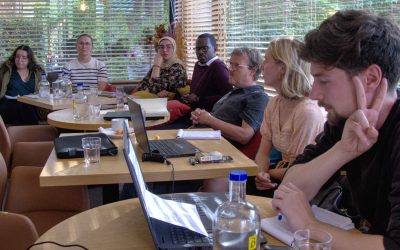
Plan d’action “Genre” de l’ONG Echos Communication: des étapes concrètes vers l’égalité de genre
Echos Communication, consciente de l’importance du principe de l’égalité de genre en tant que principe universel, s’est engagée en 2022 à mettre en œuvre un cadre stratégique qui consolide l’égalité de genre au sein de l’association, tant au niveau de son fonctionnement que de ses activités.
Echos Communication recherche un•e stagiaire en Communication
Echos Communication a pour objectif de communiquer sur ses activités et ses approches innovantes en matière de coopération au développement. Pour cela, l’association dispose de plusieurs supports de communication : Site internet, Pages Facebook, Linkedin, newsletter…
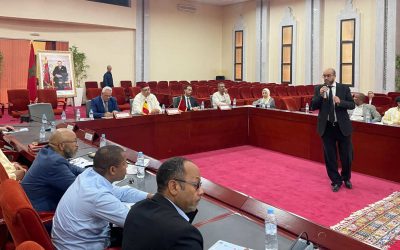
Echos Communication se mobilise pour un nouveau partenariat avec le Conseil Provincial de Zagora
Après plus de 10 ans dans la Région de l’Oriental et un peu moins dans les régions de Rabat-Salé-Kénitra et Fès-Meknès, pour le programme DGD 2022-2026 le travail se poursuit dans trois nouvelles régions, dont celle de Draâ Tafilalet au Sud du Maroc.

Catalyser le changement : un récit sur le parcours d’accompagnement et de formation des organisations de la société civile à Kaolack, Dédougou et Boromo
Dans le cadre du projet pour la promotion de l’égalité de genre et l’autonomisation économique des femmes (PEG), des parcours d’accompagnement et de formation des organisations de la société civile (OSC) ont été organisés à Kaolack au Sénégal, à Dédougou et à Boromo au Burkina Faso de février à décembre 2023.
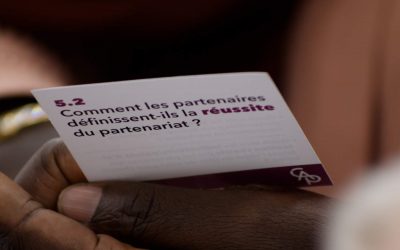
Dynamiques partenariales : accompagner le mieux être pour mieux faire ensemble
Mandatée par la Haute École Léonard de Vinci dans le cadre de son projet Valorisation 2023-2025 financé par l’ARES, Echos Communication va mener un processus d’accompagnement sur deux ans avec la Haute École et ses partenaires belges et sénégalais afin d’évaluer leurs relations partenariales.
Nos programmes

Belgique
Maroc
Sénégal
Nos approches méthodologiques
Nos interventions se déclinent en trois blocs de trois approches pour un total de neuf démarches

Valorisation des potentiels humains
Renforcer la capacité à agir des populations vulnérables ou marginalisées. Faciliter le dialogue entre acteur·rices du territoire pour entraîner des synergies. Participer à la formation des acteur·rices du changement.

Accompagnement au changement du territoire
Contribuer à faire émerger les besoins et à valoriser les ressources du territoire. Appuyer la structuration des institutions de la décentralisation. Renforcer la communication pour accompagner le changement.

Accompagnement des sociétés et du secteur du développement vers des changements de paradigmes
Sensibiliser à la prise de conscience et au dépassement des préjugés. Partager les savoir-faire et les bonnes pratiques. Promouvoir l’établissement de dynamiques partenariales réciproques et équilibrées.
Douze raisons de devenir membre d’Echos Communication
